
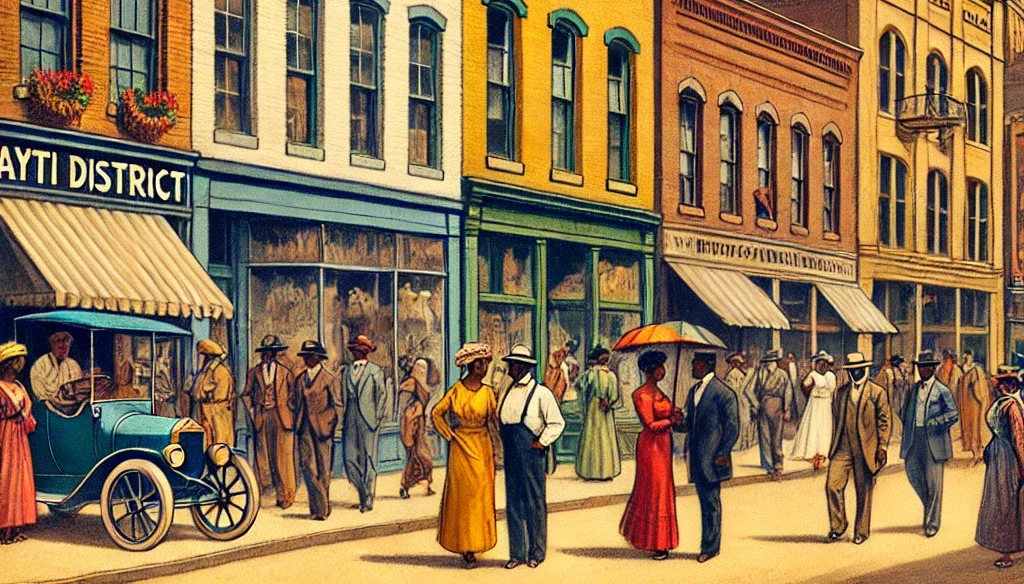
More than 200 businesses once lined Fayetteville, Pettigrew, and Pine Streets, making this neighborhood a regional model for enterprise after the Civil War. That concentration of commerce surprised national leaders and showed the power of local initiative in the state.
The community formed when freedmen built a self-reliant enclave on the city’s southern edge. St. Joseph’s AME Church anchored spiritual life from 1868 and grew into a cultural center by 1975. The story blends entrepreneurship, faith, and civic leadership.

Despite acclaim from figures like W. E. B. Du Bois and Booker T. Washington, mid-20th-century urban renewal and NC Highway 147 removed structures across more than 200 acres and severed neighborhoods. Renewal did not erase the legacy; people preserved institutions like North Carolina Mutual Life and Lincoln Hospital, and later projects sought reconnection.
Key Takeaways
- The neighborhood grew into a thriving hub of over 200 businesses after the Civil War.
- Faith institutions like St. Joseph’s AME served as cultural anchors and meeting places.
- National leaders highlighted the community as evidence of economic possibility in the state.
- Mid-century freeway construction displaced residents and severed community corridors.
- Recent efforts and landmarks aim to reconnect and honor the people who sustained the community.
- For deeper context, see local community stories and modern parallels at community culture pages and reports on similar historic hubs at historic Black Wall Streets.
Durham’s Hayti District Black History And Its Significance In North Carolina
Local entrepreneurs, clergy, and educators built structures that reshaped opportunity across north carolina. That cooperation created a model where business, faith, and higher education reinforced one another.
“a tolerant and helpful city,”
W. E. B. Du Bois
In 1898, while violence felled elected leaders elsewhere, local organizers founded North Carolina Mutual Life Insurance Company. The move underscored how civic ties could protect and expand economic power for african americans across the state.
St. Joseph’s AME Church, with its brick sanctuary completed in 1891, served as a civic anchor. North carolina central, begun by James E. Shepard in 1910 and later state-funded as a central university, created a pipeline of trained professionals.
- The Hayti Heritage Center keeps arts and education linked to place for residents.
- These institutions helped shape policy, culture, and reputation across the city and state.
| Institution | Founded | Statewide Impact |
|---|---|---|
| North Carolina Mutual | 1898 | Finance and jobs for communities |
| St. Joseph’s AME | Post-Civil War; brick church 1891 | Faith, organizing, cultural programs |
| North Carolina Central University | 1910 (state-funded 1925) | Higher education and professional training |
For expanded context, see a local history overview and an account of similar efforts at another Black Wall Street.
From Reconstruction To Black Wall Street: Origins, Growth, And Leadership
Reconstruction-era migrants clustered businesses and homes into a compact corridor that would become a model of self-reliance. That concentration let residents meet daily needs through locally owned stores, barbers, and cultural venues. The result was a functioning ecosystem of commerce and care.
Founding Of Hayti By Freedmen And Early Self-Sufficiency
Freedmen pooled labor and capital to build a community where groceries, entertainment, and mutual aid reduced dependence on segregated systems. This early self-sufficiency supported more than 200 businesses by the early 1900s and created social institutions that sustained growth.
North Carolina Mutual Life Insurance Company And The “Triumvirate”
On August 22, 1898, john merrick, Aaron McDuffie Moore, and James E. Shepard launched north carolina mutual as a Black-run insurance company. Mutual life insurance products and mortgage lending gave entrepreneurs access to capital.

John Merrick, Aaron McDuffie Moore, And Charles Clinton Spaulding As Community Builders
Those leaders—later joined by Charles C. Spaulding—formed a leadership team that professionalized finance, medicine, and development. The carolina mutual life enterprise and its land arm financed homes and storefronts and helped shape whole blocks.
National Recognition From W. E. B. Du Bois And Booker T. Washington
The men received praise from national figures who called the area a model of african american enterprise. Their work funded Lincoln Hospital and backed a network of businesses that made the community an early example of organized urban economic power.
- Company building created jobs and credit.
- Leaders blended civic purpose with practical capital formation.
- For broader context on similar movements, see what is Black Wall Street.
Institutions That Built Community And Culture
The area’s institutions stitched together faith, education, health care, and commerce into a coherent public life. These anchors organized resources, trained leaders, and hosted the rituals that sustained residents.
St. Joseph’s African Methodist Episcopal Church: Faith, Architecture, And Activism
St. Joseph’s began with brush-arbor services in 1868 and culminated in a grand brick sanctuary in 1891. Donors across racial lines and architect Samuel Leary helped realize the structure, which anchored civic action and worship.
Hayti Heritage Center: Preserving Heritage Through Arts And Education
The former sanctuary is now the hayti heritage center (est. 1975). It houses St. Joseph’s Performance Hall, the Lyda Moore Merrick Art Gallery, the Claronelle K. Trapp Brown Community Room, and the Baba Chuck Davis dance studio.
The heritage center draws 40,000+ visitors each year and runs the Hayti Heritage Film Festival (since 1994), Jambalaya Soul Slam, Hayti Dialogues, and year-round arts classes.

North Carolina Central University: From Religious School To State-Funded HBCU
Founded in 1910 by James E. Shepard as a private religious school, north carolina central university became in 1925 the first state-funded first black liberal arts college. The central university role strengthened professional pathways for the community and the wider state.
Lincoln Hospital And Healthcare Leadership
Lincoln Hospital opened in 1900, co-founded by Aaron McDuffie Moore, John Merrick, and Stanford L. Warren. Early funding from Washington Duke and a $5,000 endowment signaled cross-sector cooperation in health care leadership.
Cultural Life Along Fayetteville, Pettigrew, And Pine Streets
The streets hosted theatres, hotels, barbershops, and more than 200 businesses that fused daily commerce with cultural life. Together these institutions formed durable infrastructure that sustained civic identity even through urban renewal pressures.
For a concise local landmark overview see local landmark overview, and for broader economic lessons consult economic lessons.
Urban Renewal, Displacement, And Community Resilience
A 1958 renewal project carved a ribbon of asphalt through the neighborhood, removing more than 200 acres of homes and businesses and reshaping the urban map. The route displaced roughly 4,000 homes and 500 locally owned enterprises. Officials chose the alignment with little input from affected residents, compounding harm as access to customers, schools, and churches vanished.

Highway 147, Demolition Of Homes And Businesses, And The Reshaped Landscape
The land clearance severed street grids and weakened intergenerational wealth-building. In practice, urban renewal became a policy that erased cultural geography under the banner of progress.
Bridging Communities: R. Kelly Bryant Jr. Pedestrian Bridge And Memory
Opened in 2010, the R. Kelly Bryant Jr. Pedestrian Bridge aims to reconnect areas torn apart by the freeway and to honor a local historian who recorded durham black heritage.
Continuing Legacy At The Hayti Heritage Center: Programs, Dialogues, And Festivals
The hayti heritage center—housed in the former St. Joseph / joseph ame church building—expanded arts, education, and civic dialogue after renewal. Signature offerings include the Hayti Heritage Film Festival, Jambalaya Soul Slam, and year-round classes that nurture artists and entrepreneurs.
Lessons for recovery are visible in how culture and organizing rebuilt community confidence. For broader context on rebuilding and resilience, see a study of destruction and recovery at destruction and resilience and strategies for economic rebuilding at rebuilding economic centers.
People, Places, And Lasting Influence On The City Of Durham
Civic leadership, industry, and craft combined to project community power into city planning and finance. That mix shaped institutions, streetscapes, and public policy across the region.
Black Community Leadership, Churches, And Businesses As Anchors
Churches such as St. Joseph AME and White Rock Baptist trained leaders and organized civic life. They supplied pipelines for teachers, nurses, and elected officials.
Local companies and businesses created jobs and gave people access to land and credit. North Carolina Mutual and related ventures professionalized finance through mutual life insurance and mortgages that supported growth.

Connections To Duke, Brickmaking, And Citywide Development
Du Bois noted an “active friendship” from the Duke family that enabled partnerships while protecting independent institutions. Philanthropy helped found hospitals and university facilities.
Richard Fitzgerald’s brick production supplied materials for major structures, tying craft to civic expansion. NCCU’s auditorium and Lincoln Hospital reflect how industry, philanthropy, and religious life shaped the state’s urban map.
- Leaders and churches mobilized people around education and health.
- The carolina mutual legacy set standards for stewardship and mentorship.
- Those connections left a visible imprint on streets, land, and institutions.
For an expanded contemporary account, see the upbuilding account.
Conclusion
From sacred space to civic stage, the neighborhood’s institutions shaped policy and practice across the state. St. Joseph’s AME and the 1891 brick church now house the hayti heritage center, which keeps culture, art, and memory active.
The hayti heritage programing — including the film festival begun in 1994 — shows how a heritage center can turn a church into a living archive. Even after urban renewal removed land and homes, renewal of memory and art sustained a sense of home for local communities.
The conclusion is clear: protection of sites, support for artists and educators, and civic investment will keep this legacy alive. For a detailed account of first-in-equity efforts, see this first-in-equity overview.
FAQ
What made this neighborhood a center for Black-owned business and culture?
The neighborhood rose from Reconstruction as a hub of entrepreneurship and civic life. Freedpeople founded stores, skilled trades, churches, and professional services that served the local community and surrounding areas. Key institutions, including a leading mutual life insurance company and historically Black colleges, helped create a self-sustaining economy and rich cultural scene.
How did the mutual life insurance company influence community development?
The insurance company provided financial protection and jobs for African American families when mainstream firms excluded them. Its leadership invested in property, supported Black professionals, and funded civic projects. Those actions anchored local wealth creation and enabled sustained community institutions.
Who were the prominent leaders associated with this legacy?
Prominent figures included John Merrick, Aaron McDuffie Moore, and Charles Clinton Spaulding. They guided business growth, healthcare access, and education opportunities. Their work earned national recognition from leaders such as W. E. B. Du Bois and Booker T. Washington.
What role did religious institutions play in community life?
Churches served as spiritual centers, meeting halls, and organizing bases for civil rights and mutual aid. Notable congregations combined distinctive architecture with active social programs that supported education, charity, and cultural events.
How did the nearby university contribute to local advancement?
The historically Black university began as a religious school and evolved into a state-funded institution. It trained teachers, professionals, and civic leaders who reinforced community networks and expanded access to higher education for African Americans across the state.
What happened during urban renewal projects and highway construction?
Mid-20th-century urban renewal and highway construction led to demolition of homes and businesses, displacing residents and fragmenting long-standing community ties. Those actions reshaped the physical landscape and reduced the neighborhood’s economic base.
How has the community worked to preserve memory and culture?
Local organizations and cultural centers have focused on preservation through exhibits, public programs, and festivals. Efforts include oral histories, arts programming, and educational initiatives that celebrate the neighborhood’s legacy and advocate for equitable development.
What healthcare institutions served the community historically?
A prominent Black hospital provided essential medical services and trained Black health professionals when segregation limited access elsewhere. That institution became a symbol of self-reliance and professional advancement in medicine.
How does the area’s brickmaking and building trade factor into its history?
Brickmaking and related trades supplied material for durable homes, churches, and commercial blocks. Skilled artisans and contractors contributed to a distinctive streetscape and supported local employment and wealth-building.
What current projects or landmarks help bridge past and present?
Recent projects include pedestrian bridges, heritage centers, and community-driven revitalization efforts that aim to reconnect neighborhoods, commemorate displaced sites, and host dialogues about history and development.
How can visitors learn more about the people and stories of the neighborhood?
Visitors can explore the heritage center’s exhibits, attend public programs, tour historic churches and campus landmarks, and consult archives held by local institutions and the university for primary documents and photographs.
What is the continuing influence of this legacy on the city and state?
The legacy endures through civic leadership, educational institutions, and cultural contributions that shaped local policymaking, business practices, and the arts. Its influence extends statewide by inspiring preservation, scholarship, and community-driven development.